
Healthy Aging Starts with the Little Things
September is Healthy Aging Month, a wonderful reminder that aging well isn’t about trying to turn back the clock.
It’s about making the most of the years ahead.
It’s about having the energy to enjoy a morning walk, the curiosity to try something new, the confidence to stay connected and the freedom to spend your time doing the things that bring you joy.
And sometimes, healthy aging starts with something as simple — and enjoyable — as what’s on your plate.
As summer gives way to fall, Ontario’s harvest brings an abundance of colourful, locally sourced foods to our tables. Crisp apples, leafy greens, squash, pumpkin, sweet potatoes, berries, whole grains, nuts and seeds are not only delicious — many also provide important nutrients that can contribute to overall health and support brain health as we age.
At Comfort of Living Retirement Homes, we believe healthy aging should never feel like a list of restrictions.
It should feel like more opportunities to enjoy life.
And what better way to celebrate than around a table filled with the flavours of fall?
What Does Healthy Aging Really Mean?
Healthy aging looks different for everyone.
For one person, it might mean having the confidence to travel. For another, it could mean joining a new activity, spending more time with friends, enjoying a favourite hobby or simply having someone to share a cup of coffee with each morning.
The Government of Canada describes healthy aging as developing and maintaining the functional ability that enables well-being in older age.
In everyday language?
It’s being able to keep doing the things that matter to you.
Nutrition is one piece of that bigger picture.
So are movement, sleep, social connection, mental stimulation and having the right support when you need it.
And the beauty is that these pieces often work together.
A nutritious meal can provide energy for an afternoon activity.
An afternoon activity can lead to conversation with friends.
That conversation can lead to laughter.
And suddenly, something as ordinary as lunch has become part of a much bigger picture of wellness.
Your Brain Needs Good Fuel, Too
We often think about nutrition in terms of heart health, bone health or maintaining strength.
But our brains need nourishment, too.
Research continues to explore the relationship between dietary patterns and cognitive health. Eating patterns such as the Mediterranean and MIND diets emphasize vegetables, fruits, whole grains, beans, nuts, fish and healthy fats and have been associated in research with better cognitive outcomes.
That doesn’t mean there is a single “superfood” that can prevent dementia or guarantee perfect brain health.
There isn’t.
Instead, it’s about the overall pattern.
It’s about adding more nourishing foods to your day and enjoying a varied, balanced diet.
Fortunately, fall makes that deliciously easy.
7 Delicious Fall Foods That Love Your Brain, Too
1. Leafy Greens
Kale, spinach and other leafy greens are packed with vitamins, minerals and plant compounds.
They are also an important part of the MIND eating pattern, which emphasizes regular consumption of leafy green vegetables.
Try them in a warm soup, autumn salad, grain bowl or sautéed side dish.
And if someone says they don’t like kale? Well… perhaps they just haven’t met the right recipe yet!
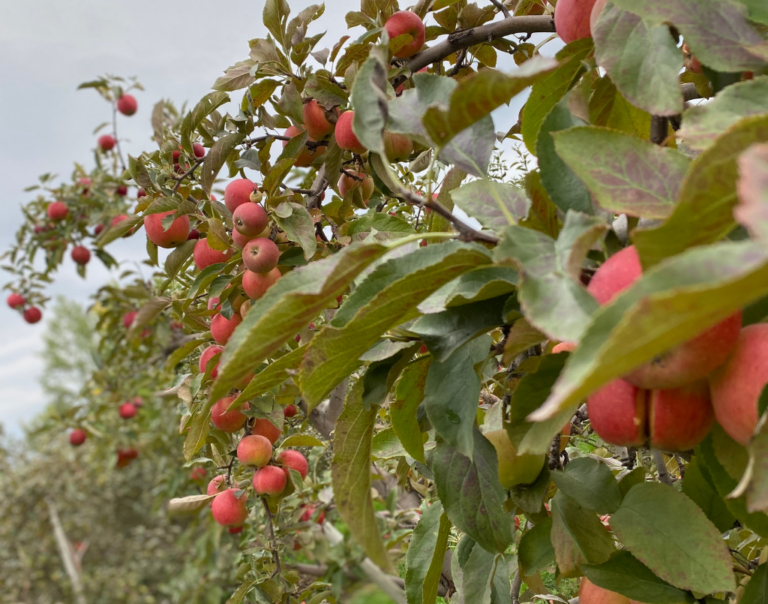
2. Apples
Few things say “fall” quite like a crisp Ontario apple.
Apples provide fibre and a variety of beneficial plant compounds. They are also incredibly versatile.
Slice one into oatmeal. Add it to a salad. Bake it with cinnamon. Enjoy it with a little nut butter.
Or simply bite into one and enjoy that unmistakable crunch.
For many older adults, apples can also bring back memories — school lunches, family orchards, apple picking with grandchildren or a favourite homemade dessert.
Food can nourish memories as beautifully as it nourishes the body.
3. Berries
Blueberries, strawberries and other berries are featured prominently in the MIND eating pattern.
They can provide fibre and a range of plant compounds and are an easy addition to breakfast or a snack.
Fresh berries may be associated with summer, but frozen Canadian berries can help keep that beautiful colour and flavour on the menu year-round.
Try them in yogurt, oatmeal, smoothies or baked dishes.
4. Pumpkin & Squash
Let’s be honest.
Fall simply wouldn’t feel like fall without pumpkin and squash.
But these colourful seasonal favourites aren’t just beautiful.
Butternut squash, acorn squash and pumpkin can contribute fibre and a variety of nutrients while adding natural sweetness and richness to meals.
Roast them.
Mash them.
Turn them into soup.
Add pumpkin to muffins or oatmeal.
There are endless ways to bring a little autumn sunshine to the plate.
5. Sweet Potatoes
Sweet potatoes are another fall favourite that can bring colour, flavour and valuable nutrients to the table.
Roasted with herbs, mashed with warm spices or added to a hearty soup, they are an easy way to make a meal both comforting and nourishing.
Because healthy food doesn’t have to look like “health food.”
Sometimes it just looks — and tastes — like a delicious dinner.
6. Nuts & Seeds
Walnuts, almonds, pumpkin seeds and other nuts and seeds can add protein, fibre and unsaturated fats to meals and snacks.
They are also part of the MIND dietary pattern.
Sprinkle them over oatmeal.
Add them to a salad.
Stir them into yogurt.
Or simply enjoy a small handful as a snack.
A little crunch can go a long way.
7. Fish
Fish deserves a place at the healthy-aging table, too.
Fish is a regular feature of Mediterranean-style and MIND eating patterns, and research continues to explore its relationship with cognitive health.
A simple salmon dinner with roasted vegetables and whole grains is a perfect example of how nourishing ingredients can come together to create a meal that feels both familiar and special.
Local Food, Seasonal Flavour & A Little More Joy
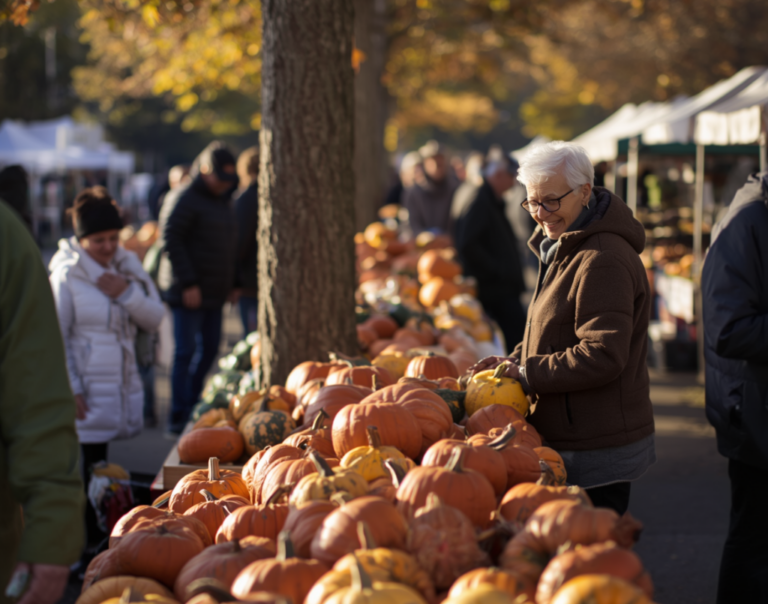
There is something particularly satisfying about eating foods that are grown close to home.
Supporting local farmers and producers connects us to our communities while giving us the opportunity to enjoy foods when they are naturally at their best.
And seasonal food gives dining a sense of anticipation.
We look forward to strawberry season.
Then corn season.
Then apples.
Then pumpkins and squash.
Food gives us little milestones throughout the year.
At Comfort of Living Retirement Homes, seasonal dining is about more than putting different ingredients on the menu.
It’s about creating experiences.
The smell of freshly baked apple crisp drifting through the dining room.
A colourful harvest salad on the table.
A warm bowl of squash soup on a cool afternoon.
A familiar Thanksgiving recipe that starts a conversation about family traditions.
These moments may seem small.
But they are often the moments that make a place feel like home.
Healthy Aging Is About More Than What's on Your Plate
We believe healthy aging is about the whole person.
Yes, nutrition matters.
But so does friendship.
So does movement.
So does laughter.
So does having something to look forward to tomorrow.
So does feeling useful, valued and connected.
And perhaps most importantly, so does having the freedom to make choices about how you want to spend your time.
That’s one of the reasons retirement living can be such a positive next chapter for many older adults.
When some of the responsibilities of maintaining a home are taken care of, there can be more time for the things that truly matter.
More time for friends.
More time for hobbies.
More time for activities.
More time for family.
More time to simply enjoy the day.
That’s healthy aging in action.
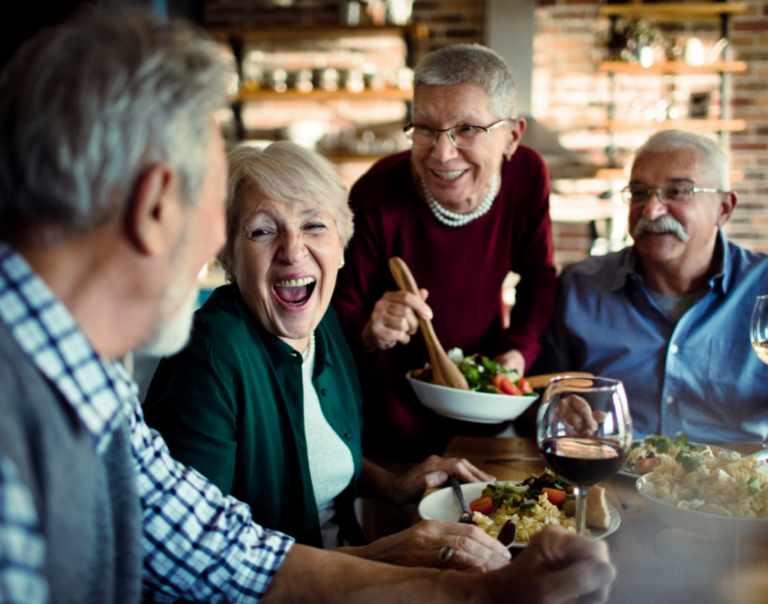
Never Underestimate the Power of a Shared Meal
There is another ingredient in healthy aging that doesn’t come from a grocery store.
Connection.
Canada’s Food Guide encourages Canadians to enjoy meals with others, recognizing that eating with family and friends can contribute to enjoyment and social connection.
And we see this every day in retirement living.
A resident sitting down for breakfast may start the morning with a simple “Good morning.”
That can become a conversation.
The conversation can become a laugh.
The laugh can become a friendship.
And before you know it, breakfast has become one of the favourite parts of the day.
This is the beauty of community.
Sometimes wellness looks like a beautiful salad.
Sometimes it looks like a walk.
And sometimes it looks like two friends lingering over coffee because neither one is quite ready to leave the table.
This Healthy Aging Month, Ask Yourself a Different Question
Instead of asking:
“What should I be giving up as I get older?”
Try asking:
“What would help me enjoy this stage of life even more?”
Maybe it’s trying a new activity.
Maybe it’s eating more seasonal foods.
Maybe it’s reconnecting with an old friend.
Maybe it’s making time for something you’ve always wanted to try.
Maybe it’s accepting a little help so you can spend more energy doing the things you love.
Healthy aging isn’t about perfection.
It’s about possibility.
It’s about continuing to grow, connect, discover and enjoy.
And if a delicious bowl of roasted butternut squash soup happens to be part of that journey?
Even better.
A Fall Harvest Worth Celebrating
As Healthy Aging Month arrives and the leaves begin to change, fall offers us a beautiful reminder:
There is so much goodness still to be enjoyed.
Good food.
Good friends.
New experiences.
Old traditions.
Fresh beginnings.
At Comfort of Living Retirement Homes, we believe the best years aren’t necessarily behind us.
They’re the ones we are still creating.
And sometimes, creating a wonderful day begins with something wonderfully simple:
A nourishing meal.
A familiar flavour.
A seat at the table.
And someone beside you to share it with.
Because healthy aging isn’t just about adding years to life.
It’s about adding life to those years.
A Note About Brain Health & Nutrition
Nutrition is one important part of healthy aging, but there is no single food or diet proven to prevent Alzheimer’s disease or dementia. Research into the relationship between diet and cognitive health continues to evolve. Individual nutritional needs can also vary depending on health conditions, medications and other factors. Older adults should speak with their healthcare provider or a qualified dietitian for personalized advice.